
CDMX KIOSK
TALLAHASSEE, FLORIDA

DESIGN CONCEPT
Inspired by the rich architecture of the Aztec civilization that once stood in Mexico City, the apex temple represents a connection to the ancient past and the deities that ensure human survival. The design of the kiosk will pull cues from this symbolic form through featuring a false stepped entryway that imitates the grand procession up to the temple. The materiality will convey the sense of place through lightweight finishes that mimic traditional stonework and will be highlighted through dramatic lighting effects. Careful consideration is given to the movement of people through space by establishing a visual hierarchy that mirrors the passage of time. The façade of the kiosk will represent the city’s historic monumental relics, transitioning into the modern-day Mexico City as visitors step into the temple.
PROJECT CONTEXT
Prior to colonial settlement by the Spanish, the site of what is now Mexico City was formerly occupied by numerous indigenous civilizations, most notably the Aztecs. The Aztecs developed a highly organized and stratified society, creating a dense city-state called Tenochtitlan, which was built onto an island in the middle of lake Texcoco. Tenochtitlan was well-known for its intricate canal systems, agricultural feats, and impressive architecture. This settlement, once regarded as one of the largest cities in the world, was later conquered by the Spanish, who ordered the destruction of many pre-Columbian dwellings and structures. The design of the kiosk seeks to educate visitors of this dynamic past and inform them about the variety of cultural practices that have existed in Mexico throughout its history.
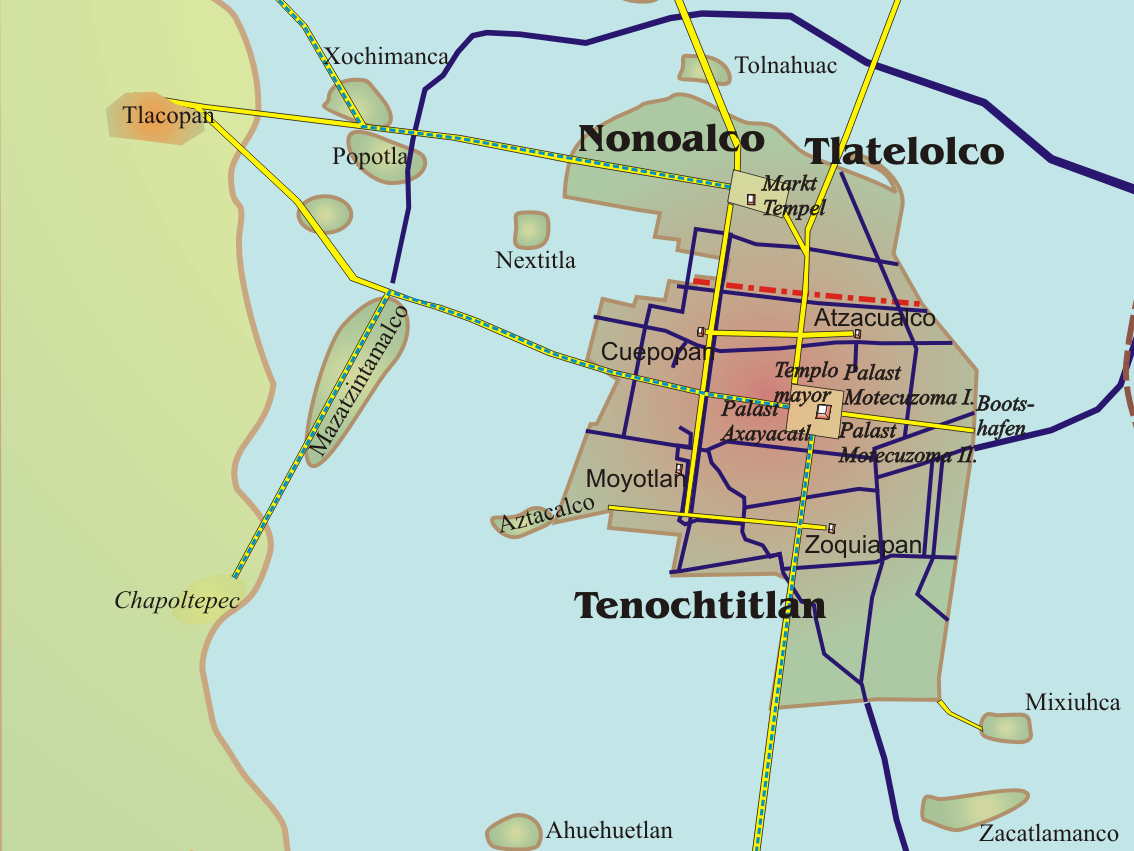

FLOOR PLAN
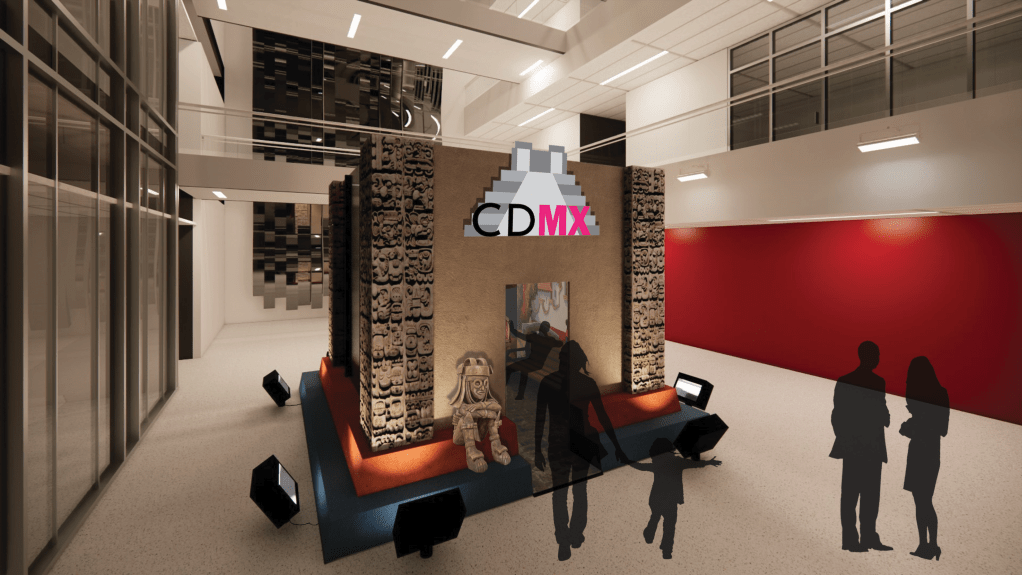

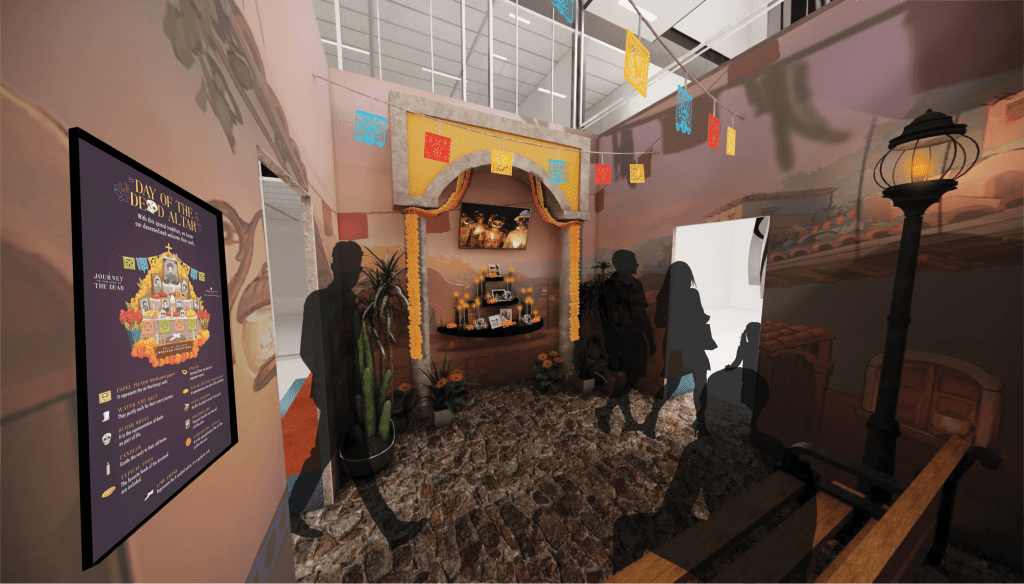
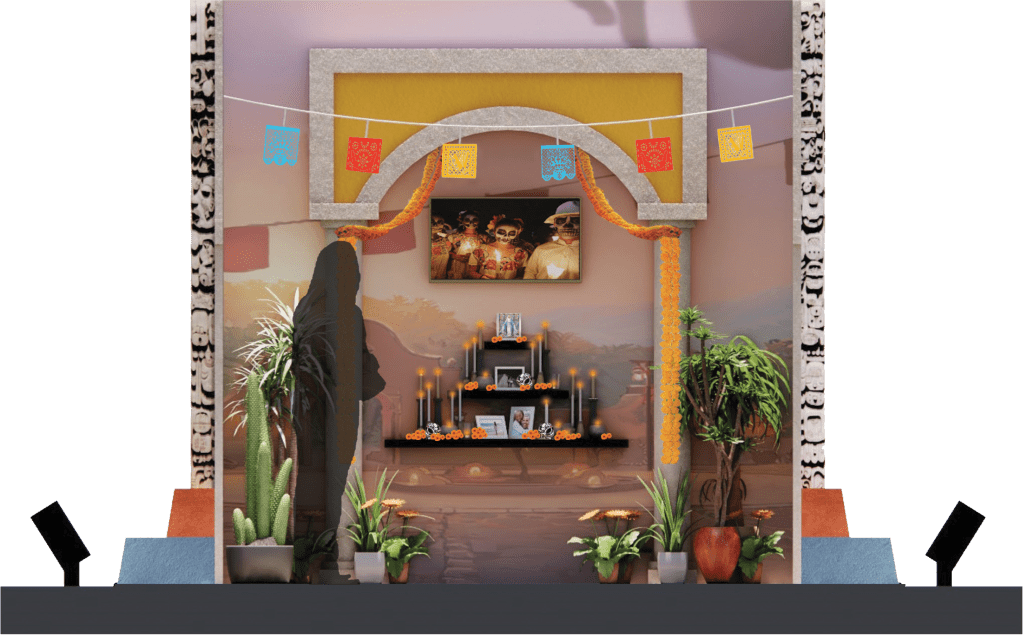
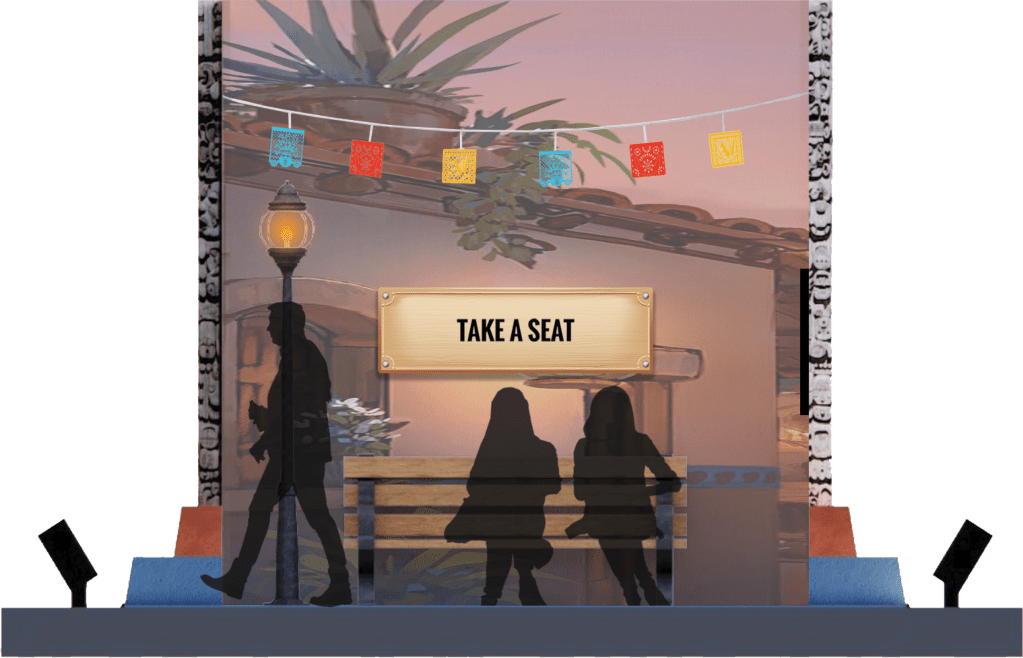
The exterior of the kiosk embraces the rich history of Mexico City, formerly established as the Aztec civilization of Tenochtitlan. Unique architectural forms reference the prominent temples where ritualistic and ceremonial events took place and where the Aztecs connected with their gods. Upon entering, guests are transported to a modern-day Mexican village, nestled in the outskirts of the city. Interactive elements, such as a decorated ‘ofrenda’ inform visitors about the Dia de los Muertos celebration that is an important tradition in Mexican culture.
 Alejo's Designs