
LIVING ROOFS INC.
DURHAM, NORTH CAROLINA
DESIGN CONCEPT
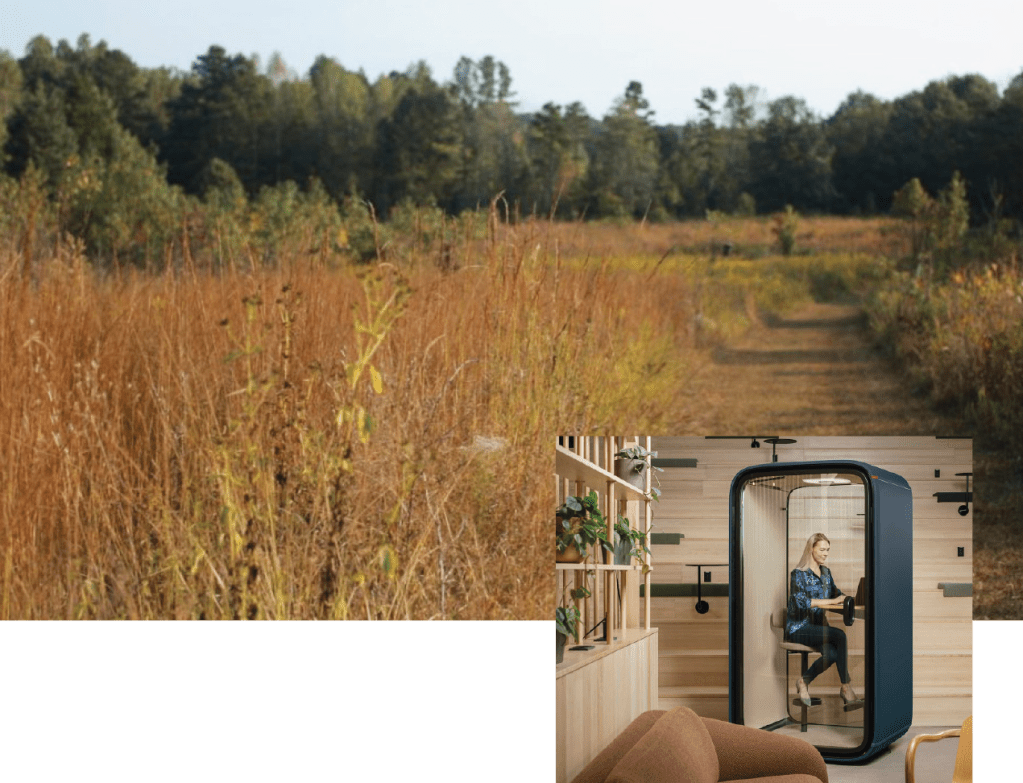
Dense hardwood thickets punctuate the open prairie of Durham’s native Piedmont landscape. The design pulls cues from this geographic context and its ability to inform
occupancy. The notion of prospect-refuge, which is directly tied to the work that the company performs with re-introducing native landscapes to the built environment, is achieved through the manipulation of vertical and horizontal planes, which are used to delineate private and focused work settings. This is a vital consideration for a company with interdisciplinary staff & needs.
PROJECT CONTEXT
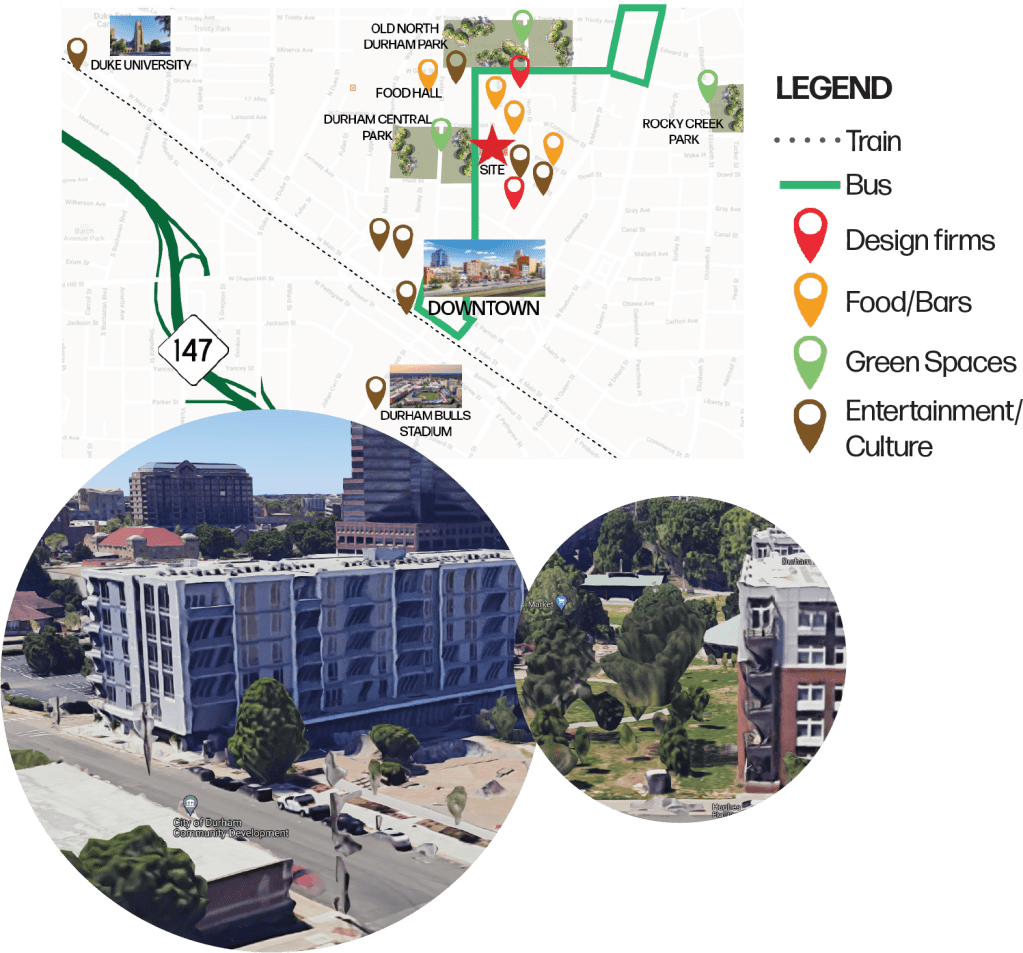
Living Roofs Inc. is a design-build company based in Durham, NC that specializes in the construction & maintenance of green roof systems. A preliminary analysis of the site, located in the up-and-coming ‘Warehouse District,’ reveals access to amenities that will inform the usage of the space & the connection of the brand’s mission of sustainability, such as numerous greenspaces & multi-modal facilities.

LEVEL 1
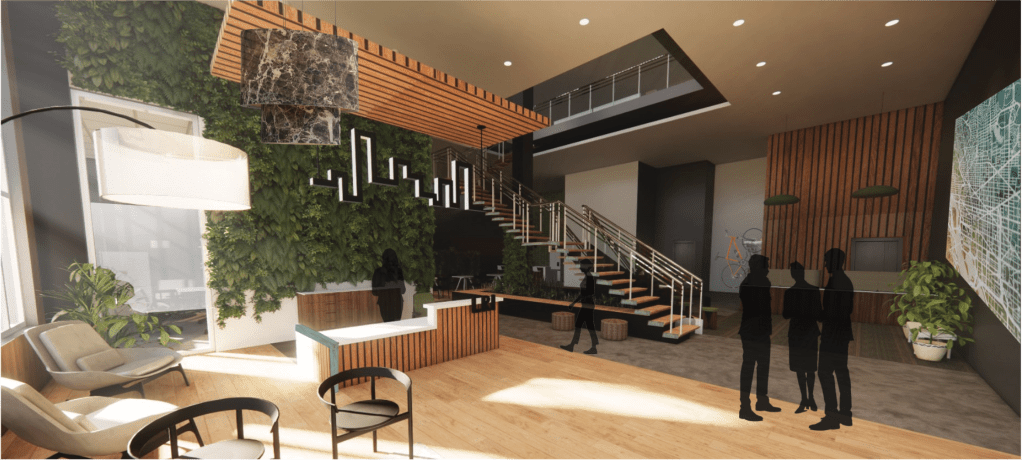
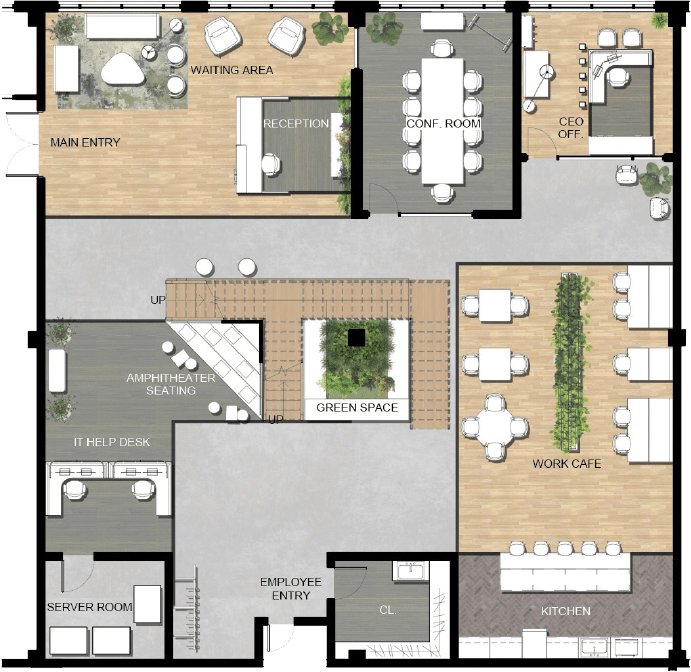
The reception greets employees and visitors entering from the primary street access, showcasing a strong branded identity through custom millwork & lighting. The waiting area utilizes dropped ceilings & a more luxury ‘residential’ materiality in order to enhance the comfort of guests & reference the variety of clients that the company works with, including both commercial & residential projects.
Dynamic materials, biophilic design, and prominent graphics reinforce the client’s commitment to sustainability. The cafe seeks to foster a more public and collaborative environment, with its larger volume lending itself to this intentional mood through an open to above ceiling that has been treated through a suspended acoustical grid. A combination of booth seating and 2-4 person tables captures the broad range of users and ensures greater autonomy by providing a diversity of opportunities to work. By locating this space on the first floor, users are encouraged to have greater mobility.



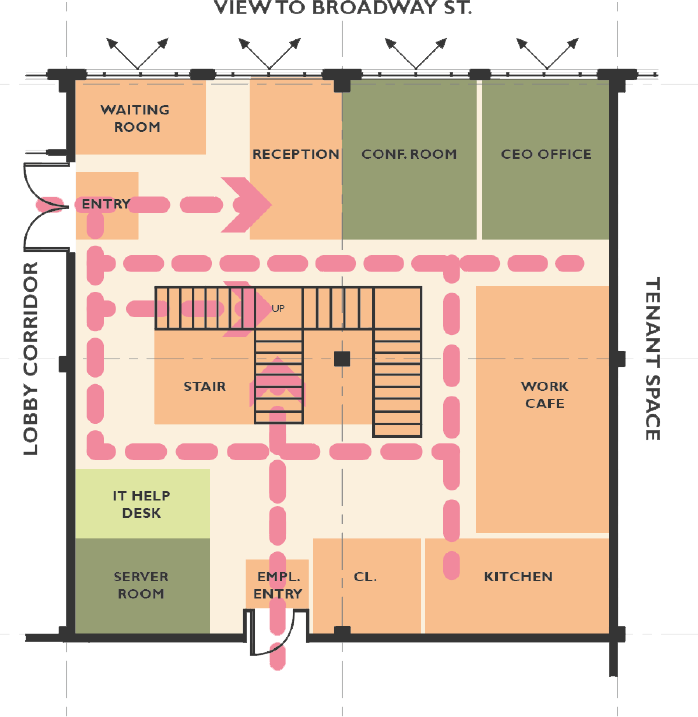
CIRCULATION DIAGRAMMING
LIGHTING STUDY
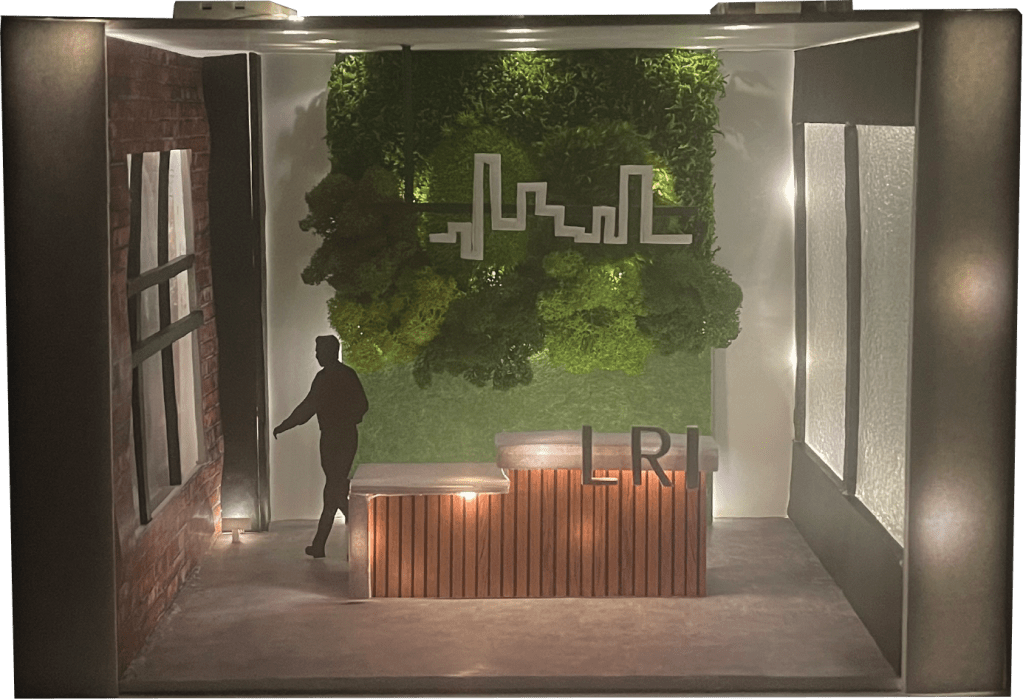
To better understand how to achieve the desired lighting goals for the space, I examined how various lighting effects may interact within the reception area to create an evocative and inspirational environment. A 3D foam core model simulated this reception space and showcased how lighting strategies such as cove lighting under the reception desk or wall grazing to highlight the textural elements of the live wall feature could be used to unify the space. Recessed cans achieved ambient illuminance targets, while a custom branded fixture was designed for local task lighting.

LEVEL 2
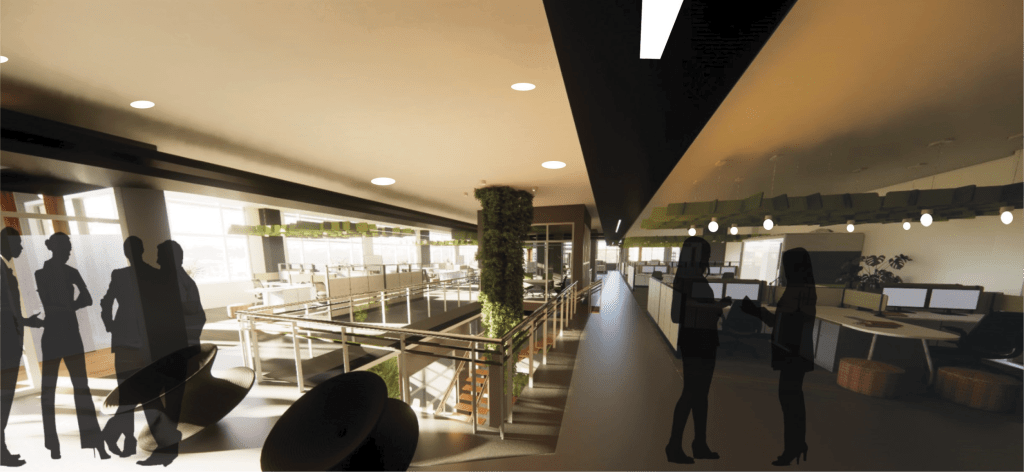
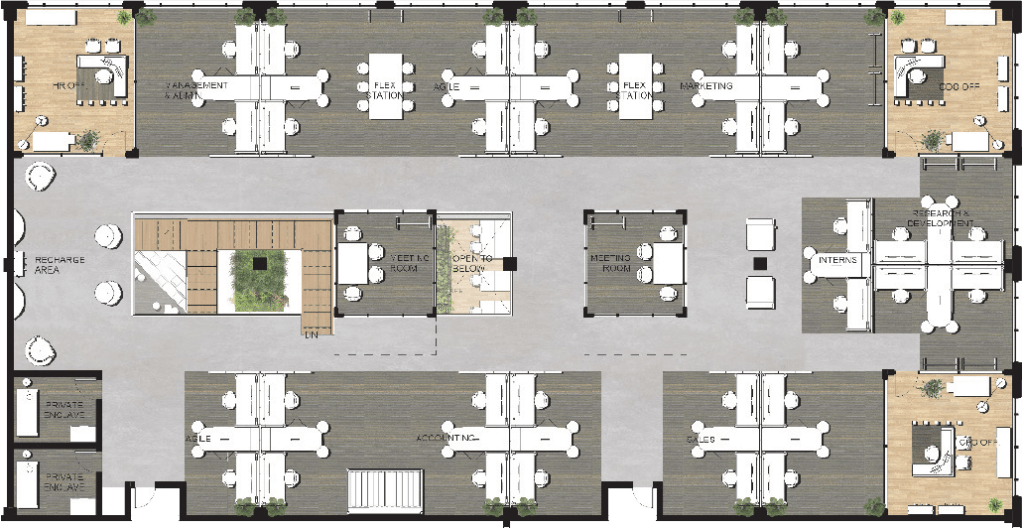
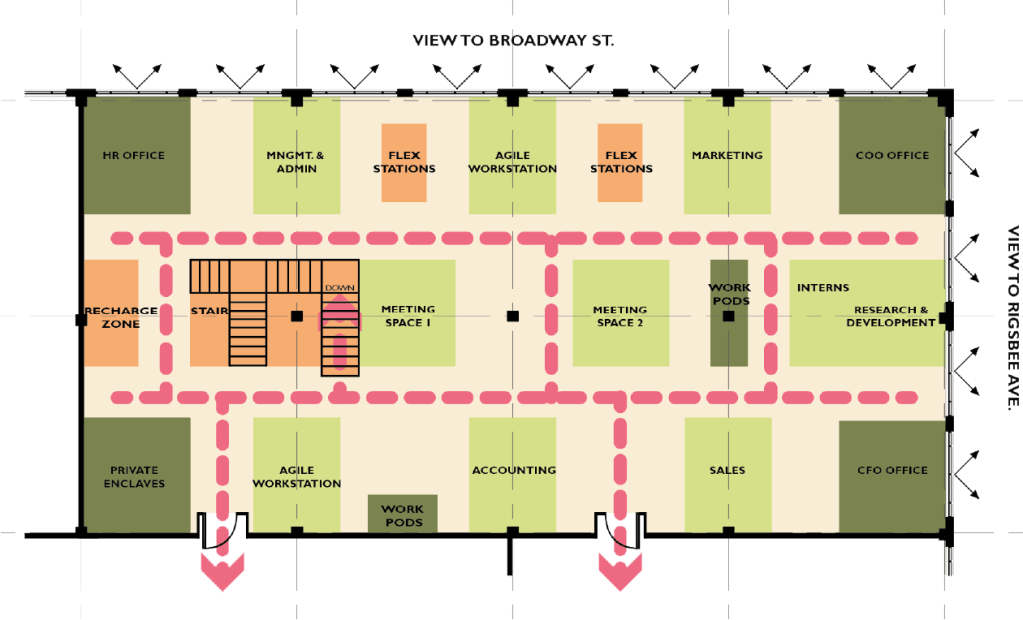
The open work area features private workstations that offer sufficient space for tasks and is arranged by proximity to relevant supervisors & related departments to promote interaction between peers and supervisors. Collaborative workstations provide supplemental flexibility. The design seeks to promote biophilia through maximizing daylight and broad views to the exterior, along with a prominent live feature that wraps the central column of the monumental stair.
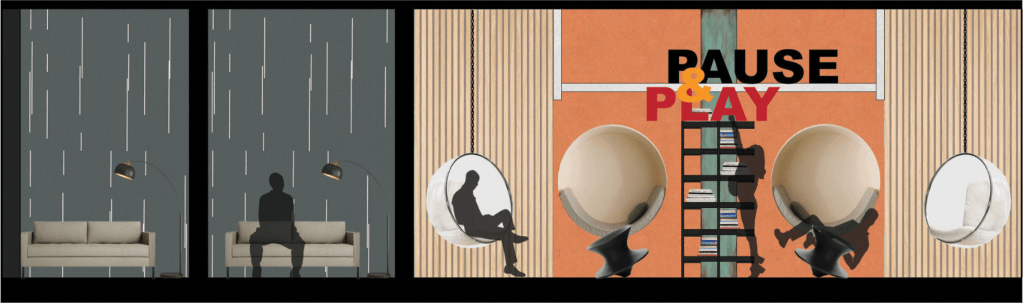
The recharge zone looks to capitalize on current trends that encourage greater autonomy and flexibility within the workplace. This has shown to have dramatic benefits on employee retention and productivity. As such, the office embraces moments for employees to step away from their desk and reorient themselves. Keeping in mind a diverse range of staff and considerations for neurodiversity, environments that leverage both warm and active elements, along with muted cool tone spaces support the range of occupant needs.

CIRCULATION DIAGRAMMING
DETAILED CEILING PLAN
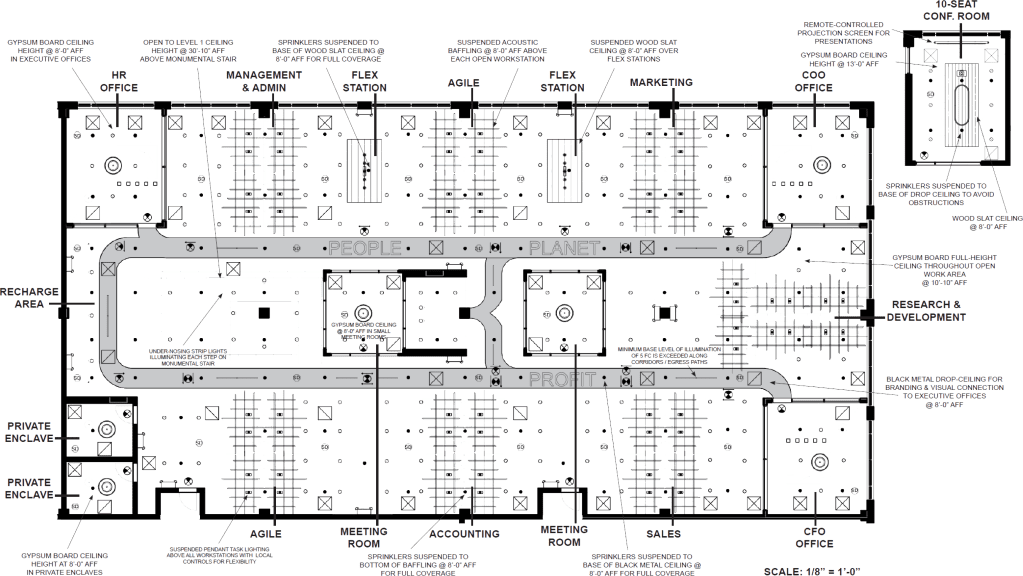
The ceiling components work to support the concept by providing intimate or open environments based on the specific needs of the workspace. Additionally, variations in materiality are used to distinguish one workspace from the surrounding area, as well as add visual interest. In spaces with tall volumes, or where noise mitigation is essential, such as private workstations, acoustical treatments are applied. The circulation space is clearly defined through a central corridor that forms a ‘racetrack’ around the open office area to help establish a visual connection to the executive offices. Egress and fire safety have been carefully considered, along with occupant comfort through strategic placement of HVAC supply and return & local task lighting.

WORKPLACE TRENDS RESEARCH
DESIGNING FOR NEURODIVERSITY
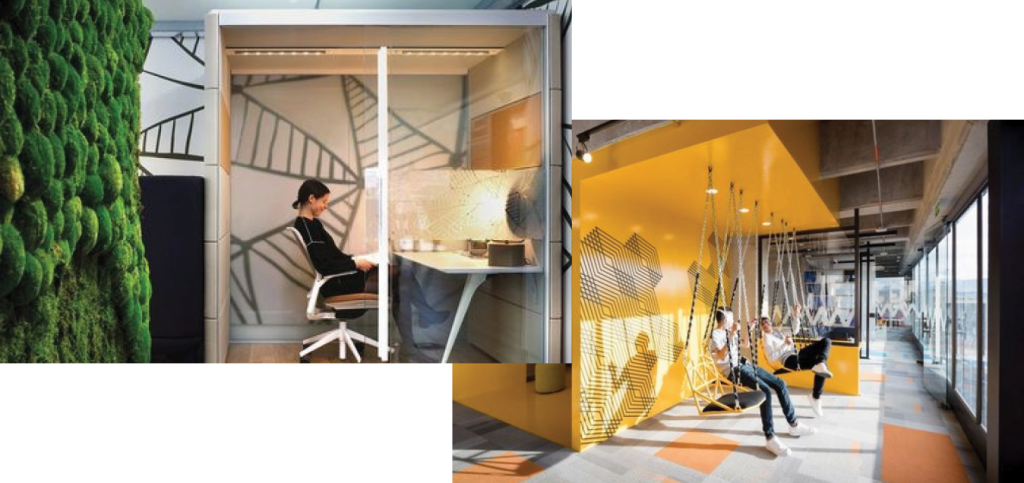
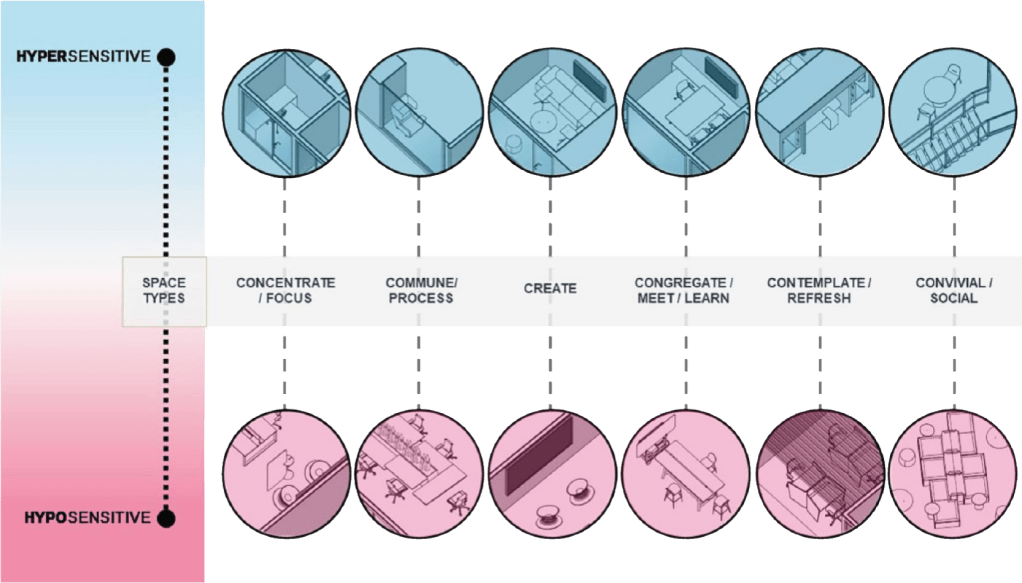
The office design should incorporate workspaces that adress various sensitivities to sight, touch, smell & sound. Consider material finishes that support the uses of the space, as well as sightlines and noise levels. Respond to individuals of varying tolerances to stimuli.
Designing for neurodiversities is a growing phenomenon, as individuals have become increasingly aware of their surroundings following the Covid-19 pandemic. In order to promote inclusivity and boost productivity in the workplace, designers must understand the six major space types and how the form of these spaces are dependent upon an individual’s sensitivity to either hyposensitive or hypersensitive stimuli.
FLEXIBLE & TASK-FIT OFFICES
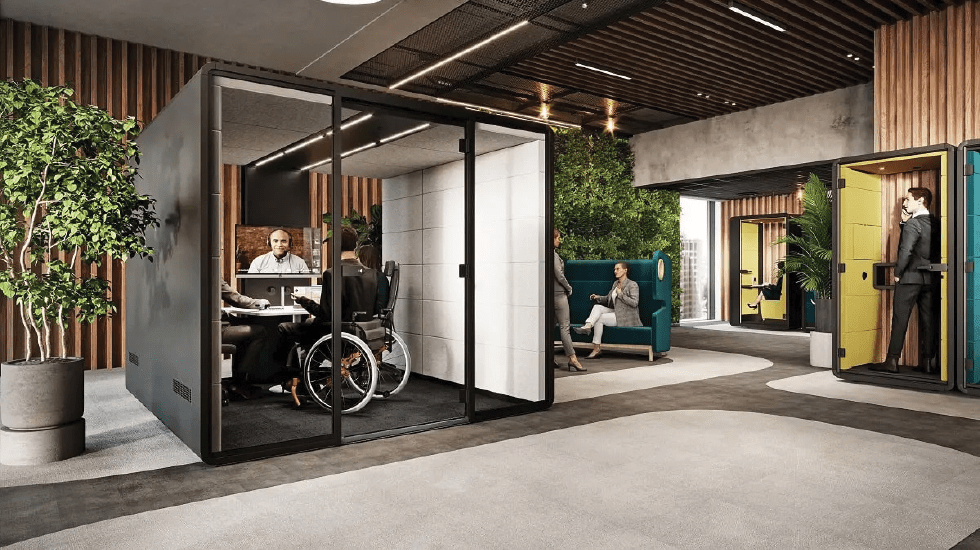
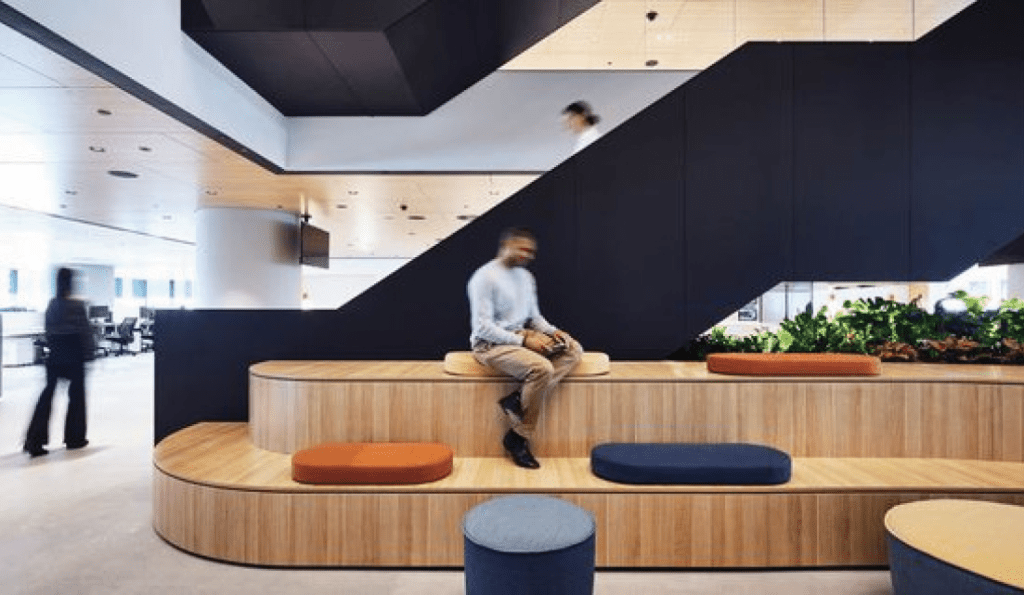
Another emerging workplace trend is the movement toward task-fit and flexible workstations. As individuals begin to recognize the faults in conventional workplace design for promoting autonomy, employees are increasingly in search of office environments that allow them the flexibility to perform diverse tasks. Additionally, the workplace is now viewed as a space for intentional conversation between peers.
The layout of the workspaces should offer options for various types of tasks, including open collaboration and private work, as well as provide sufficient access to power and connectivity. This is critcial for boosting percieved autonomy and flexibility in the workplace.
 Alejo's Designs